

September 29, 2026, Weather Update
Austin Community College District is monitoring weather conditions across the region. The National Weather Service (NWS) anticipates severe weather beginning late Wednesday night, and a Flood Watch has been issued for a large area of South Central Texas.
Weather Outlook
- Heavy Rain: Widespread rain is expected from late Wednesday night through Friday, with totals of 2 to 4 inches across our area and localized amounts up to 8 inches.
- Flash Flooding Risk: There is a risk of excessive rainfall capable of producing flash flooding. Intense rainfall rates may cause rapid runoff, street flooding in urban areas, and rising water levels in low-lying areas and creeks.
- Severe Storm Potential: There is a risk of severe storms during the day on Wednesday, which may bring damaging winds, large hail, and an isolated tornado to portions of our region. Forecasts regarding exact timing, intensity, and location remain uncertain.
Campus Operations
At this time, all ACC campuses remain open and on their regular schedules. We will continue to monitor conditions and are prepared to make adjustments as needed. Any possible delays or cancellations due to weather conditions will be shared through ACC’s Emergency Alert system and posted to our website.
Safety Reminders & Preparedness
We urge you to remain vigilant and cautious, especially if traveling during peak rainfall periods.
- Turn Around, Don’t Drown! Never drive through flooded roadways. Check low-water crossings and real-time closures on ATXfloods or local road conditions on DriveTexas before traveling.
- Please check your Emergency Alert contact information and ensure it is up-to-date so you receive all important updates from the college.
Local Preparedness Resources and Safety Guides
- Warn Central Texas: Register for emergency alerts in your neighborhood.
- Deaf Link Accessible Hazard Alert System (AHAS): Accessible hazard alerts for Deaf, Blind, Hard of Hearing, or DeafBlind individuals.
- STEAR Program: State assistance registry for individuals requiring extra aid during emergencies.
- NWS Safety Guides: Review guides for Thunderstorms, Tornadoes, and Flooding.
Conditions may vary across the district, so please stay safe and use discretion. Employees who have questions should contact their supervisor. Students should contact their instructor(s).
Our priorities are ensuring the health and safety of our students, employees, and campuses. We will keep you informed of any updates and decisions. Thank you for your patience and understanding. Stay safe.
ACC Emergency Management transitions under new Leadership 12/01/2025
Effective December 1, Emergency Management is now part of the ACC Police Department. Emergency Management Coordinators Kristina Childress and Nick Caspers will continue to support the department’s mission to ensure the safety and security of students, faculty, and staff through timely emergency notifications, preparedness initiatives, and training opportunities.
ACC hosts Big Five Winter Weather Seminar -12/03/2025
AUSTIN, TX—Leaders from the region’s top institutions gathered to refine their coordinated response to future winter weather events. The Austin Community College (ACC) District hosted the 2025 Winter Weather Seminar, organized by the City of Austin Emergency Management.
The event focused on the critical, collaborative role played by the area’s “Big 5” organizations in ensuring public safety and continuity during severe cold or ice events in the Austin-Travis County area.
The Big 5 are the foundational agencies responsible for large-scale operations, shelter activation, and communication during a winter weather emergency. Their participation at the seminar underscores a commitment to a unified response strategy.
The essential organizations include:
- Austin Community College (ACC)
- The University of Texas at Austin (UT Austin)
- City of Austin Emergency Management
- Travis County Emergency Management
- Austin Independent School District (AISD)
The seminar’s goal was to ensure that all five entities are aligned on plans, protocols, resource sharing, and public messaging, recognizing that the coordinated action of these groups is vital to a successful response for the entire metro area.
5 Winter Weather Safety Essentials
1. Protect Your Pipes and Faucets
This is one of the most common and expensive issues in Central Texas freezes.
- Insulate or Cover: Use foam pipe insulation, towels, or commercial covers for all exposed outdoor faucets (hose bibs) and pipes, especially those in unheated areas like attics, garages, and crawl spaces.
- Drip Faucets: When temperatures are below freezing for an extended period, allow one or two indoor cold-water faucets (preferably those connected to pipes along an exterior wall) to maintain a slow, steady drip. This relieves pressure in the line, preventing bursts.
- Open Cabinets: Open kitchen and bathroom cabinet doors under sinks to let warm air from your home circulate around the pipes inside.
- Know Your Shut-Off: Locate and learn how to turn off your main water shut-off valve now. If a pipe bursts, shutting off the water quickly can save you from catastrophic damage.
2. Protect People and Practice Heating Safety
Staying warm safely is crucial, especially in the event of a power outage.
- Carbon Monoxide Danger: NEVER use a gas oven, stove, charcoal grill, propane/gas camping heater, or generator inside your home or garage. These produce deadly, odorless carbon monoxide gas. Only use approved, vented heating devices.
- Dress in Layers: If you must go outside, wear layers of warm, dry clothing, covering your head, hands, and feet.
- Use Space Heaters Safely: If using an electric space heater, place it at least 3 feet away from anything flammable (drapes, blankets, furniture). Plug it directly into a wall outlet, not an extension cord.
- Stay Informed: Have a battery-powered or hand-crank radio ready for alerts and weather updates in case the power goes out.
3. Protect Pets and Plants
Keep your living things warm and safe from the cold.
- Pets Indoors: Bring pets indoors, or ensure they have a warm, safe, and dry shelter with access to non-frozen drinking water.
- Plant Covers: Bring potted plants inside. For plants in the ground, cover them with towels, blankets, or burlap to protect them from the frost. Water them lightly before a hard freeze, as moist soil retains heat better than dry soil.
4. Prepare an Emergency Kit and Charge Devices
Be ready to shelter in place without power or running water for several days.
- Stock Up: Have a 3-7 day supply of non-perishable food and drinking water (1 gallon per person, per day).
- Power & Light: Gather flashlights, extra batteries, and fully charge all cell phones, laptops, and portable power banks before the storm hits.
- Medication: Ensure you have at least a week’s supply of necessary medications.
- Full Tank: Keep your vehicle’s gas tank full—you may need it to charge devices or for heat (run it outside, never in an attached garage).
5. Stay Off the Roads (If conditions are icy)
Austin and Central Texas are not equipped for widespread ice/snow removal, and local drivers are generally inexperienced in those conditions.
- Avoid Travel: If roads are icy or snow-covered, do not drive unless it is an absolute emergency. The risk of accidents and getting stranded is very high.
- Bridges and Overpasses: Be extremely cautious of bridges, overpasses, and shaded areas, as they freeze first and can be hidden sheets of ice (often called “black ice”).
- Treat Dark Signals: If a traffic light is out, treat the intersection as an all-way stop.
Holiday Tips
Practice Food Safety and Prevent Food-borne Illness:
Food poisoning can result from improper handling, cooking, or storage. Leftovers are good for three to four days at most when refrigerated properly. Avoid placing cooked food or fresh produce on a cutting board or other surface where there was raw food. Do not wash raw meats, the CDC recommends, as that can spread bacteria that can make you sick. And as always, wash your hands often with soap and water.
Prioritize Holiday Fire Safety
Maintain the 3-Foot Safety Zone: Keep all flammable decorations—including trees, curtains, and wreaths—at least 3 feet away from heat sources like fireplaces, space heaters, and candles.
Unplug and Extinguish Before Bed: Always turn off all decorative lights (indoor and outdoor) and extinguish all candles before going to sleep or leaving the house.
Stay in the Kitchen: The busiest days for cooking fires are Thanksgiving and Christmas. If you are simmering, boiling, or frying food, stay in the kitchen and don’t leave the heat unattended.
Use Caution with Candles: Use sturdy, non-tip candle holders. In December, candles start nearly half of all decoration fires, so switch to battery-operated LED candles where possible, or keep all lit flames away from children and pets.
Timely Tree Disposal: A dry Christmas tree is a major fire hazard. Dispose of your live tree promptly after the holidays (35% of tree fires occur in January) by taking it to a local drop-off or pickup service.
Manage Stress and Set Boundaries
Say No to Overcommitment: Review your schedule and be comfortable declining non-essential events or saying no to tasks that cause you undue stress. Prioritize the traditions and gatherings that bring you the most genuine joy.
Realistic Expectations: Let go of the need for a “perfect” holiday. Family dynamics can be complicated; focus on being present and accepting the imperfection of the moment.
Maintain Healthy Habits: Don’t abandon your routines. Ensure you are getting enough sleep, staying physically active (even a short walk helps!), and eating mindfully, especially during busy days.
Shop Smart and Secure Your Home
Porch Pirate Prevention: If ordering gifts, use delivery alerts, request delivery to your workplace (if allowed), or use an Amazon/FedEx/UPS lock box or store pickup option to prevent package theft.
Car Security: When shopping in person, keep all purchased bags and valuables out of sight (e.g., locked in the trunk) and always park in well-lit areas.
Travel Hold: If you are traveling, use automatic light timers, ask a trusted neighbor to check on your home, and arrange a hold on your mail and newspapers. Never broadcast your travel plans on social media while you are away.
Make the Plan First: If alcohol will be served, make arrangements for your ride before you take your first drink. This removes the temptation to drive home later.
Use Ride-Share or Taxi Services: Take advantage of ride-sharing apps (like Uber or Lyft), local taxis, or public transit. The cost of a ride is always less than the cost of a DWI, a hospital visit, or a life.
Designate a Driver: If you are attending a gathering with friends, choose a sober designated driver who commits to remaining alcohol-free for the entire night.
Host Responsibly: As a host, be prepared to cut guests off, offer non-alcoholic options, and have the phone numbers for local taxi companies or ride-share apps readily available. Offer a couch or guest room for those who should not drive.
Holiday Impaired Driving Prevention: If you are the designated driver, keep your distance from drivers who seem impaired. Avoid driving between midnight and 3 am. Limit holiday business travel and work virtually if possible. Be prepared to act if you see someone who is unfit to drive. Remember, if you or someone else is buzzed or high, you should not drive.
Stay Informed – Winter Resources
- ACC District RAVE Alerts for winter closures or delays. Sign up or make sure your contact details are up to date.
- Register at https://warncentraltexas.org/ for local emergency warnings.
- Visit DriveTexas.org for real-time highway and road conditions.
- Visit austintexas.gov for more local winter weather safety tips.
- Visit https://www.austintexas.gov/winterweather and download the Ready Central Texas App.
- City of Austin’s official emergency alerts page: austintexas.gov/alerts
The City of Austin operates two types of facilities during winter weather: Cold Weather Shelters (for overnight stays) and Warming Centers (for daytime refuge). The key thing to know is that these facilities are activated on an as-needed basis when the forecast dictates it (usually when temperatures are expected to drop to 35°F or below). For a list of active shelters and centers, as well as additional information, please visit: https://www.austintexas.gov/department/homeland-security-and-emergency-management/alerts.
Register for STEAR if you or someone you know:
- Lives with disabilities
- Is medically fragile
- Lives with access and functional needs
- Has limited mobility
- Has communication barriers
- Will require additional medical assistance during an emergency event
- Will require transportation assistance
- Will require personal care assistance
Training Opportunites
ACC SRP Training for Staff and Students – Coming January 2026
ICS 300 and 400 – https://www.preparingtexas.org/ – Dates and availability may vary.
PER371 – Cybersecurity Incident Response and Management – Dates may vary.
TEEX Cyber Readiness Summit – 02/03/26 – 02/05/26 – https://teex.org/teex-cyber-readiness-summit/
CISA Active Shooter Preparedness Webinar – https://www.cisa.gov/resources-tools/training/active-shooter-preparedness-webinar
ACC Flood Relief Support
On July 4, 2025, Central Texas experienced a catastrophic flooding event. Austin Community College is focused on the safety and well-being of our students and employees and supporting our neighbors in their time of need. Below is a list of resources available to our community, information on support, and ways you can help. We’ll continue to update this page with new information, resources, and ways to help as recovery efforts progress. Please check back regularly.
ACC Support Resources
ACC offers resources and support to help our students and employees who are impacted by the recent storms. Below are opportunities available at the College.
For Students
- Counseling Services: ACC counselors are available to support you through this difficult time. Schedule an appointment.
- Academic Support: If you’re struggling, please talk to your instructor. We’re here to help you stay on track.
For Employees
- Employee Assistance Program (EAP): Confidential support and resources are available to help you and your family. Access EAP.
- Work & Leave: Speak with your supervisor if you need time to recover or assist loved ones.
Ways You Can Help
ACC is working with local partners and rescue groups to identify the greatest needs. Below, we will share opportunities on and off our campuses to support flood relief efforts.
Here are trusted organizations that support victims and their families. You can give money, donate supplies, serve meals, or help with pet care.
Local Relief & Recovery Organizations
- The Hill Country Community Foundation
Supporting relief and rebuilding efforts after the flood of July 4, 2025. Your generosity helps our neighbors recover. Link here. - Salvation Army – Kerrville Kroc Center
Providing meals, shelter, and essential services. Link here. - TEXSAR
Austin-based nonprofit specializing in emergency response has teams and search dogs to aid in the search for the missing. Link here. - Central Texas Chapter | American Red Cross
Providing food, relief supplies, and other critical resources like financial and family travel assistance. Several emergency shelters are open for those seeking refuge or a place to charge their phone and connect with our Disaster Mental Health volunteers. Link here. - Central Texas Community Foundation – Wilco CARES
Collecting funds to provide direct financial assistance to residents and small businesses in Williamson County affected by flooding and other disasters. Link here. - The Austin Disaster Network
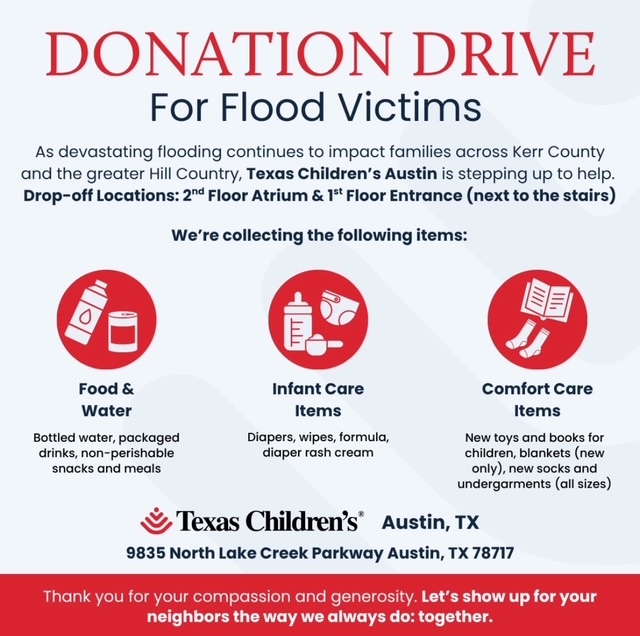
Seeking funds, in-kind donations, purchases from Amazon Wishlist, and volunteers. Link here. - Texas Children’s Hospital in Austin
Collecting donations of essential items for children and families in crisis. Link here. - Kerrville Pets Alive! / Austin Pets Alive!
Rescuing and reuniting flood-impacted pets. Link here. - Williamson County Regional Animal Shelter
Seeking fosters for displaced dogs and cats, as well as monetary donations. Link here.
September 29 Weather Update
Austin Community College District is monitoring weather conditions across the region. The National Weather Service (NWS) anticipates severe weather beginning late Wednesday night, and a Flood Watch has been issued for a large area of South Central Texas.
Weather Outlook
- Heavy Rain: Widespread rain is expected from late Wednesday night through Friday, with totals of 2 to 4 inches across our area and localized amounts up to 8 inches.
- Flash Flooding Risk: There is a risk of excessive rainfall capable of producing flash flooding. Intense rainfall rates may cause rapid runoff, street flooding in urban areas, and rising water levels in low-lying areas and creeks.
- Severe Storm Potential: There is a risk of severe storms during the day on Wednesday, which may bring damaging winds, large hail, and an isolated tornado to portions of our region. Forecasts regarding exact timing, intensity, and location remain uncertain.
Campus Operations
At this time, all ACC campuses remain open and on their regular schedules. We will continue to monitor conditions and are prepared to make adjustments as needed. Any possible delays or cancellations due to weather conditions will be shared through ACC’s Emergency Alert system and posted to our website.
Safety Reminders & Preparedness
We urge you to remain vigilant and cautious, especially if traveling during peak rainfall periods.
- Turn Around, Don’t Drown! Never drive through flooded roadways. Check low-water crossings and real-time closures on ATXfloods or local road conditions on DriveTexas before traveling.
- Please check your Emergency Alert contact information and ensure it is up-to-date so you receive all important updates from the college.
Local Preparedness Resources and Safety Guides
- Warn Central Texas: Register for emergency alerts in your neighborhood.
- Deaf Link Accessible Hazard Alert System (AHAS): Accessible hazard alerts for Deaf, Blind, Hard of Hearing, or DeafBlind individuals.
- STEAR Program: State assistance registry for individuals requiring extra aid during emergencies.
- NWS Safety Guides: Review guides for Thunderstorms, Tornadoes, and Flooding.
Conditions may vary across the district, so please stay safe and use discretion. Employees who have questions should contact their supervisor. Students should contact their instructor(s).
Our priorities are ensuring the health and safety of our students, employees, and campuses. We will keep you informed of any updates and decisions. Thank you for your patience and understanding. Stay safe.
Back to Top