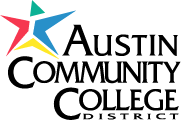

Next Level Learning Lab at Harvard University
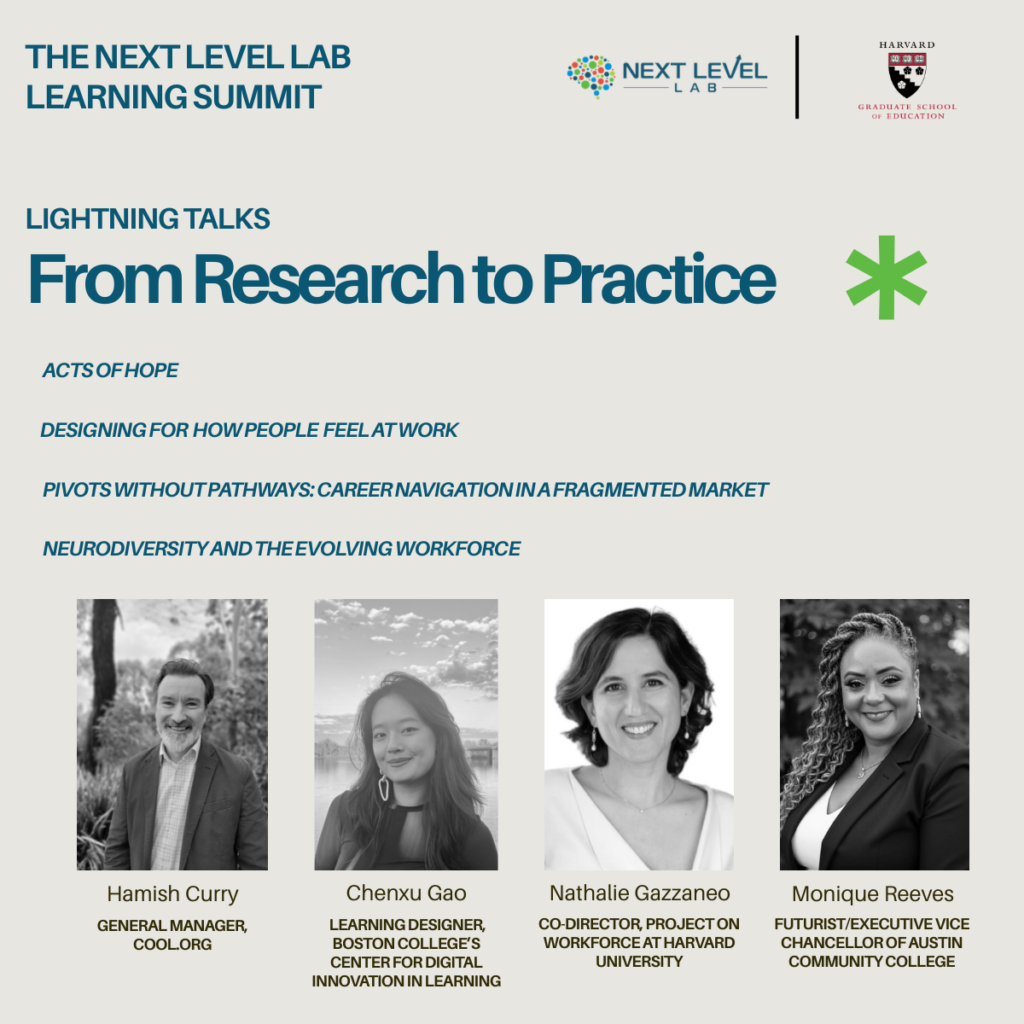
HBCU AI Conference & Training Summit 2026
As artificial intelligence rapidly reshapes industries, institutions, and communities, the critical question is no longer whether innovation will happen — but who it is designed for, who governs it, and who ultimately benefits. Future-Proofing Innovation in the Age of AI is a main-stage conversation that brings together leaders in technology policy, AI ethics, systems design, education, and community-centered innovation to examine how we build AI ecosystems that are resilient, responsible, and accountable over time.
Rather than prioritizing speed or scale alone, this session centers stewardship — the responsibility to design, deploy, and govern AI in ways that strengthen democracy, expand opportunity, and protect human dignity. Panelists will explore how institutions, innovators, and communities can move beyond reactive responses to AI and adopt intentional, values-driven strategies for shaping the future.
Positioning HBCUs and other community-rooted institutions as architects of innovation, this conversation reframes leadership in AI not as something to catch up to, but as something to intentionally lead.
Learning Objectives
By the end of this session, participants will be able to:
- Understand the core principles of responsible and future-ready AI ecosystems, including governance, ethics, accountability, and long-term sustainability.
- Identify the role of institutions — particularly HBCUs and community-rooted organizations — in shaping AI policy, culture, and innovation pathways.
- Examine how workforce preparation, cultural context, and ethical infrastructure contribute to the resilience of AI systems.
- Explore strategies for moving from reactive AI adoption to intentional, values-driven leadership.
- Reframe innovation as an opportunity for stewardship and collective impact, ensuring AI advances equity, opportunity, and human dignity.
Speakers

Larry Irving
Irving Group, President and CEO

LaQuetta Washington
Sr. Principal Consultant, Delivery & Transformation , Slalom

Monique Reeves
Executive Vice Chancellor, Office for the Future, Austin Community College District

Steve Adler
Special Faculty Appointment at Huston Tillotson University and former Mayor of Austin, Huston Tillotson University
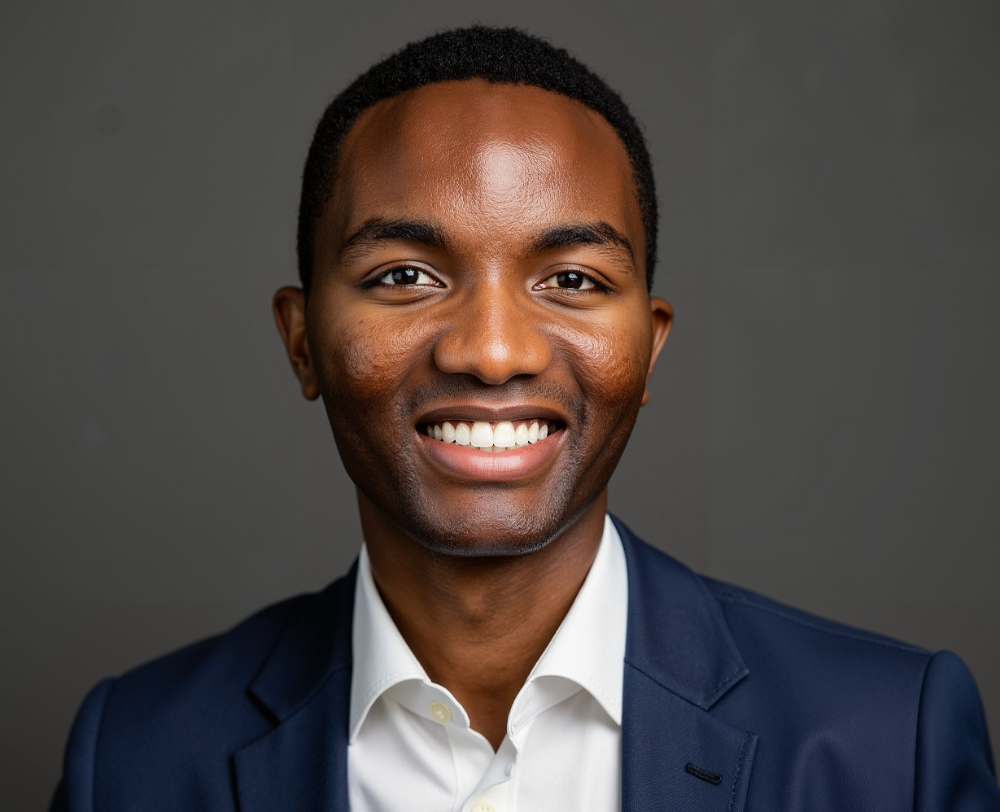
Martin Banjo
Sr. Director, Customer Success , Ellucian

Ingrid LaFleur
Founder and Director, The Afrofuture Strategies Insitute
Moderator

Sahra Ali
Global Design and Communications Strategist, Corporation for Public Interest Technology
League For Innovation – Innovation Showcase – Dec. 2025

Beyond the Crystal Ball: How Austin Community College’s Futurist is Helping Colleges Prepare for the Unknown
Dr. Monique Reeves, Futurist/Executive Vice Chancellor of Office of the Future, Austin Community College District
Frey and Osborne’s (2017) “The Future of employment: How susceptible are jobs to computerization?” provided a critical analysis of how common jobs were vulnerable due to rapid advances in technology. The authors described the potential impact of artificial intelligence (AI), automation, robotics, and advanced sensors to transform the work landscape across multiple disciplines. Their research showed that up to 47 percent of U.S. employment was at risk of being automated within one or two decades. In addition to the technological shifts, 2030 marks the retirement peak for baby boomers (Mishel et al., 1999).
Those immersed in preparing for workforce changes knew that immense work would need to be done to prepare our society and institutions for the future state within two decades. Then, COVID-19 hit and accelerated many previous projections. The pandemic forced a digital transformation on a global scale.
Current Environment
Today, higher education institutions face a convergence of challenges, including the enrollment cliff (Bauman, 2024), technological advances, changing public perceptions of the value of college degrees, and financial difficulties. This confluence of issues is prompting many institutions to reevaluate their missions, strategies, methods, and operations. However, some community colleges still adhere to procedures similar to those in place at their founding, while the world around them has undergone significant changes. Many community colleges were established during a period of rapid growth, with one opening per week between 1965 and 1972 (Geiger, 2011). Today, we are seeing a vastly different trend. According to an article in The Hechinger Report (Marcus, 2024), “about one university or college per week . . . , on average, has announced that it will close or merge (para. 9).
Acceleration Gap
Higher education faculty, staff, and administrators are operating in an environment increasingly characterized by volatility, uncertainty, complexity, and ambiguity (VUCA) (Bennis & Nanus, 1985). Technology adoption cycles have been compressed from decades to months, yet colleges are predominantly operating on five-year strategic plans. Institutions that adhere to accreditation and state approval processes typically take 18 months to three years to develop new curriculum, while labor market analyses show that the half-life for skills has decreased from 10 years to less than five years for general skills and two and a half years for technical skills (Skillable, n.d.; Goel & Kovács-Ondrejkovic, 2023). The cascading result is that students pay the price when they earn a degree or certificate in a career field that has been eliminated by automation. Many community college students juggle jobs, families, and other responsibilities, which means completing an associate degree may take five to six years. With so much time and effort invested, students cannot afford to pursue a degree that will not hold value in the job market.
Leadership Blind Spot and Community Abandonment
Formal training and professional development have traditionally prepared many community college administrators for stability. However, the current VUCA environment demands a different skill set, one rooted in frameworks that anticipate change. The absence of a future-focused mindset and the necessary skills can create a blind spot for leaders who adhere to traditional frameworks. With the best intentions, they can invest millions in equipment and curricula that become outdated before the first cohort completes related programming. A lack of alignment with the industry is also highly frustrating for industry partners who need graduates with relevant, job-ready skills. They expect colleges to be able to pivot quickly to prepare students for the workforce.
Community colleges can be anchors for local workforce development efforts. However, without agile planning, the efforts can become reactive rather than proactive or even predictive. Reactive responses have significant implications for working-class students, who bear the heaviest burden of mismatched skills in the labor market. In extreme situations, it can lead to a local brain drain as students are forced to leave their communities because their college failed to anticipate and prepare for emerging opportunities.
The Community College DNA Advantage
Community colleges were established with a mission to be responsive to the needs of their communities. Community is not just part of their name; it is an integral part of their DNA. As a result, community colleges are designed for responsiveness and local adaptation. Many communities established community colleges with workforce development as part of their charge. Each college has existing relationships with employers that enable feedback loops for future-sensing. The student demographics at community colleges include adult learners and career changers (and/or career switchers), who embody the future of upskilling/reskilling, continuous learning, and adaptation.
Emerging Success Stories
The dawn of a future-sensing era in higher education is emerging. By 2027, 70 percent of major universities are expected to adopt AI-enhanced strategic planning (The Strategy Institute, 2024). Several community colleges have already launched programs for the future: Miami Dade College, MiraCosta College, Cuyahoga Community College (Tri-C), and ACC. ACC, Miami Dade, MiraCosta, and Tri-C have all launched future-focused programs: Miami Dade has built strong industry partnerships and developed essential programs for students (McNaughton, 2024); MiraCosta has provided training for faculty, staff, and administrators; Tri-C established the Center for the Future of Work (Cuyahoga Community College, n.d.); and ACC appointed its first futurist in May 2025, demonstrating a commitment to being a forward-thinking, future-focused institution.
Russell Lowery-Hart, ACC’s Chancellor, is committed to operational excellence, and had the vision to invest in a dedicated futurist position to support this aim. A futurist is a professional who systematically explores possibilities, identifies emerging patterns, and models potential futures to inform decision-making (Figure 1). A futurist’s role is not to predict the future, but to ensure that the college is prepared for it. To create a scaffold for success, the chancellor crafted a formal job description for a cabinet role that incorporates scenario planning, strategic foresight, trend analysis, and network and coalition building. Necessary competencies include systems thinking, scenario planning, change management, data analysis, stakeholder engagement, adaptability, and strategic communication. The futurist guides the college in future-focused strategic planning. An example of this at ACC is the launch of Transform_ED. MiraCosta College President Sunita Cooke emphasized the importance of a future-oriented mindset, stating, “Without future-focused thinking, we remain one step behind, always in crisis mode” (Pierce & Wisely, 2025).
The Network Effect Opportunity
To understand the collective benefits of a future-sensing community of practice, one could apply the concept of the network effect. To better understand the concept, imagine that in 1985, Pierre Omidyar and Jeff Skoll launched a small, clumsy Internet platform called eBay with only a few dozen users. The platform became helpful for the participants only after it had reached a critical mass of users. Why? Because as each person joins the community, they bring value, and a special magic begins to take hold. This phenomenon is known as the network effect: The more people who use a system or adopt a behavior, the more useful it becomes for everyone.
Futurism and foresight operate similarly. Now, imagine a community college where faculty, student affairs professionals, deans, and staff all begin using strategic foresight tools, such as scenario planning, labor market simulations, and pre-mortems. The more users, the more shared intelligence. The collective intelligence increases. The symbiosis is how the network effect transforms environments. The leaders create a culture that supports exploration and foster a culture that rewards and incentivizes an authentic learning culture, where people are not afraid of punitive consequences when they take strategic risks. John Maxwell (2000) encouraged leaders to practice courage when he admonished, “Fail early, fail often, but always fail forward.” Maxwell was advocating for leaders to leverage mistakes as stepping-stones to success. Creating this type of culture, where people are willing to take calculated risks, makes our colleges smarter, and this, in turn, creates additional benefits for every subsequent person who joins the movement.
ACC recently launched the Alliance of Future Makers (AFM). The AFM is a community of practice for early adopters who are co-creating the future. We aim to build a shared global network for future-focused professionals. Our collective professional development and pooled expertise offer several benefits for smaller institutions. An additional advantage is the connection to industry partners eager to collaborate with innovative colleges and scale their efforts. Ultimately, the colleges in the alliance will act as catalysts for community resilience, innovation, and sustainability.
Why Now?
With the demographic cliff, competition is increasing, not just among colleges, but also from external players who see workforce development as a ripe area for transformation (Schroeder, 2024). There is a growing emphasis on workforce innovation at both the federal and state levels. We are at the precipice of more disruptive change. Leaders who embrace this moment and adopt a future-focused paradigm are the ones who will be most competitive.
As colleges seek to remain competitive in a VUCA society, it is becoming increasingly necessary for leaders to possess the relevant skills, competencies, and frameworks to prepare for the many unknowns. The VUCA environment can overwhelm busy college leaders, causing them to be consumed by the urgent issues that arise and leaving them with no plan for thriving in the future. Ultimately, the college will either inherit the future that someone else creates or co-create its own future. The future belongs to those colleges that choose to craft their destiny.
References
Bauman, D. (2024, February 7). Colleges were already bracing for an enrollment cliff. Now there might be a second one. The Chronicle of Higher Education.
Bennis, W. G., & Nanus, B. (1985). Leaders: The strategies for taking charge. Harper & Row.
Goel, S., & Kovács-Ondrejkovic, O. (2023). Reskilling for a rapidly changing world. Boston Consulting Group. https://www.bcg.com/publications/2023/reskilling-workforce-for-future
Cuyahoga Community College. (n.d.). Center for the future of work. https://www.tri-c.edu/workforce/center-for-the-future-of-work.html
Frey, C. B., & Osborne, M. A. (2017). The future of employment: How susceptible are jobs to computerisation? Technological Forecasting and Social Change, 114, 254-280.
Geiger, R. L. (2011). The ten generations of American higher education. In P. G. Altbach, P. J. Gumport, & R. O. Berdahl (Eds.), American higher education in the twenty-first century: Social, political, and economic challenges (3rd ed., pp. 37-68). Johns Hopkins University Press.
Marcus, J. (2024, April 11). Colleges are now closing at a pace of one a week. What happens to the students? The Hechinger Report. https://hechingerreport.org/colleges-are-now-closing-at-a-pace-of-one-a-week-what-happens-to-the-students
Maxwell, J. C. (2000). Failing forward: Turning mistakes into stepping stones for success. Thomas Nelson.
McNaughton, D. (2024, March 19). Employability and future-proofing graduates: Pathways to success at MDC [Audio podcast episode]. In Changing Higher Ed. The Change Leader, Inc. https://changinghighered.com/employability-and-future-proofing-graduates
Mishel, L., Bernstein, J., & Schmitt, J. (1999). The state of working America 1998-99. Economic Policy Institute.
Pierce, D., & Wisely, A. (2025, June/July). Looking forward. CC Journal. https://www.ccjournal-digital.com/ccjournal/june_july_2025/MobilePagedArticle.action?articleId=2066356#articleId2066356
Schroeder, R. (2024, November 20). Winds of change in higher ed to become a hurricane in 2025. Inside Higher Ed. https://www.insidehighered.com/opinion/columns/online-trending-now/2024/11/20/winds-change-higher-ed-become-hurricane-2025
Skillable. (n.d.). The half-life of skills is shortening: This is what it means and how you can overcome it. https://www.skillable.com/resources/hands-on-learning/half-life-of-skills-is-shortening
The Strategy Institute. (2024, December 6). The role of AI in transforming strategic planning processes. https://www.thestrategyinstitute.org/insights/the-role-of-ai-in-transforming-strategic-planning-processes
Monique Reeves is Executive Vice Chancellor for the Future at Austin Community College District in Austin, Texas.
Opinions expressed in Innovation Showcase are those of the author(s) and do not necessarily reflect those of the League for Innovation in the Community College.
HEI – Higher Education Innovation – Presidents’ Conference – 9/29/25


Beyond the Crystal Ball: How Futurist Intelligence Can Future-Proof Your Institution
Dr. Monique Reeves, Futurist/Executive Vice Chancellor of Office of the Future, Austin Community College District
In an era where disruption arrives faster than tradition can adapt, college presidents face unprecedented challenges: enrollment challenges, technological upheaval, shifting workforce demands, and evolving student expectations. This session reveals how forward-thinking leaders are moving beyond reactive planning to become institutional futurists, using strategic foresight tools to anticipate change rather than simply respond to it.
You’ll discover practical futurist methodologies including scenario planning, trend analysis, and weak signal detection that top universities are already implementing. Learn how to build innovation partnerships that extend your institution’s reach while creating sustainable competitive advantages. From AI integration to reimagining campus experiences, we’ll explore real case studies of colleges that transformed uncertainty into opportunity.
This isn’t about predicting the future—it’s about creating it. Walk away with actionable frameworks to position your institution not just to survive the next decade, but to lead it. The future of higher education belongs to those who shape it intentionally.
Spectrum News Article 7/13/25:
Austin Community College introduces first ‘futurist’
BY Andres Rendon Texas – Spectrum News
UPDATED 1:35 PM CT Jul. 13, 2025 PUBLISHED 8:00 AM CT Jul. 12, 2025
AUSTIN, Texas — Austin Community College (ACC) is changing up how it prepares for the days and years ahead by hiring a futurist, a new role in higher education.
Dr. Monique Reeves filled the role of executive vice chancellor for the future at ACC in mid-May.
Much of her role, she says, is preparing the college for whatever it may face, but she has her fair share of myth-busting as well.
“I don’t have a magic ball — an [Magic] 8 Ball — that I shake to guess what higher ed will be doing in six months,” Reeves said. “I will look at trends to ensure that the college is prepared for best case, worst case and most likely case.”
One trend on the rise is the use of artificial intelligence (AI). Reeves says while other academic institutions are creating codes of conduct surrounding AI, she wants to ensure that those who are leading the classroom have a firm grasp on it before rolling out policy.
“You can’t ask your students to use AI if all of your staff and faculty haven’t been trained first,” she said.
She says it’s important to find a balance of making sure everyone on campus is aware of how to navigate AI while still adhering to the school’s integrity policy. However, she can’t ignore AI and its growth.
“Especially when industry partners are expecting students to come out with AI fluency,” Reeves said.
Another goal for Reeves is building trust with students to ensure they’re making the most out of their investment when they enroll.
Having served as the provost for ACC before, Reeves says her experience working on the student side of higher education administration gives her a deeper understanding of what students are seeking after high school.
“Understanding that that’s a personal decision, it has to make dollars and sense,” she said.
She says leaders have to look at a student as a whole. Removing life barriers like transportation or employment concerns is crucial so that students can focus on their own future.
Digital Twin Press Release 7/10/25:
Digital Twin Consortium Welcomes Austin Community College as Member
Accelerating the use of digital twins while empowering innovation and future-ready learning through institutional membership
BOSTON, MA – JULY 10, 2025 – The Digital Twin Consortium® (DTC) today announced that the Austin Community College District (ACC) has joined the consortium, a global collaborative organization driving the advancement and adoption of digital twin technology.
Under the visionary leadership of Dr. Monique Reeves, Executive Vice Chancellor of the Office for the Future, ACC is taking a bold step toward positioning students, faculty, and staff at the forefront of digital transformation. This partnership reflects ACC’s ongoing commitment to innovation, industry alignment, and preparing learners for tomorrow’s workforce—today.
“Joining the DTC is more than an achievement—it’s an open door,” said Dr. Reeves. “It invites our community to explore the future of technology, experiment, and lead. We’re building a more connected, responsive, and future-focused institution.”
“At Austin Community College, we believe our students deserve access to the tools and technologies shaping the future. Our partnership with the DTC positions Austin Community College not only as a place of learning, but as a hub for innovation and industry collaboration that ensures our graduates are ready to lead in a rapidly evolving world,” said Dr. Lowery-Hart, ACC Chancellor.
“We are thrilled to welcome Austin Community College as a member of the DTC,” said Dan Isaacs, General Manager and Chief Technology Officer at the DTC. “We are excited that students will have the opportunity to learn about digital twins and enabling technologies, including multi-agent-based systems (MAGS) and platforms. This will enhance their knowledge and provide valuable experience for future growth opportunities.”
ACC’s faculty, staff, and students gain access to exclusive resources, learning opportunities, industry connections, research, and collaborative projects through this membership.
About Digital Twin Consortium
Digital Twin Consortium® (DTC) is Accelerating Digital Twin Innovation™. DTC executes the promise of digital twins and associated technologies by working closely with our members to accelerate the market. We foster development, raise awareness through impactful work products, and drive increased digital twin adoption across industries. DTC is a program of Object Management Group®. For more information, visit https://www.digitaltwinconsortium.org.
Note to editors: Digital Twin Consortium is a registered trademark of OMG. See the listing of all OMG trademarks. All other trademarks are the property of their respective owners.
Back to Top